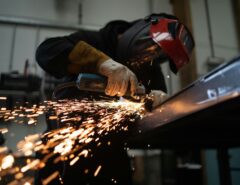
A construction site is somewhere that all workers need to be particularly aware of the hazards that are there. There are a lot of hazards that can be found on a construction site that you need to be aware of when working there, and employers need to ensure that all staff have the appropriate training.
Here are some of them…
Fire – There are a lot of fire risks on a building site and it is very important that fire safety training is given and that there are precautions in place, as well as that all the people who work there know what to do in the event of a fire.
Dangerous Substances – In construction there are many substances which are used that can be hazardous if the correct safety procedures are not followed. From things like paints and solvents, to airborne fibres like dust, there are things that can cause significant health issues.
Working at Height – Often there will be a need to work at a height when you work in construction, and if the correct procedures are not followed, then this could result in a fall which could even be fatal. Training like this IPAF course is important for people who are operating machinery for lifting people at height.
Heavy Machinery – One of the things that you are guaranteed to find on a building site is heavy machinery, and this is something that all people using need to be well trained on in order to use safely.
Falling objects and moving machinery
Construction workers are used to noise, dust and heavy machinery, which is part of what makes the work dangerous. Serious injuries often happen when the worker or someone nearby does not follow safety procedures, so everyone on site has a part to play.
Falling objects are one of the main risks. Anywhere work is going on overhead, there is a chance of tools or materials dropping, so fall protection systems should be in place, or someone should be stationed to keep watch while the work is carried out.
Heavy machinery is the other major hazard. Excavators and other large plant moving around a site should use flashing lights so that workers know where they are and can stay out of the way. Clear routes for vehicles, kept separate from people where possible, help too. When the right procedures are in place and followed, most of these risks can be kept under control.