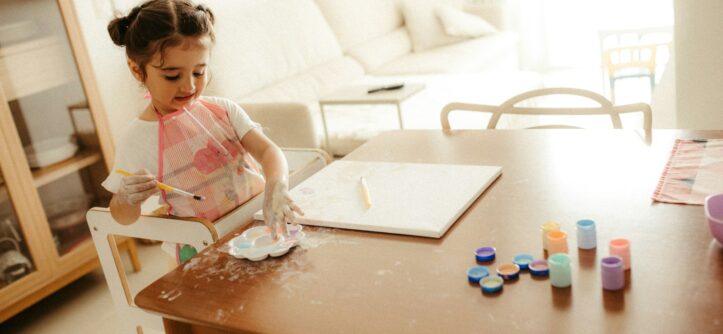
Engaging in arts and crafts offers a multitude of benefits that extend beyond entertainment. It provides children with opportunities to socialise and express themselves. Also it enhances their ability to concentrate and think critically. This plays a role in their growth, overall well being and development.
Children possess innate creativity and arts and crafts allow them to channel their imagination. Through the use of materials, colours and engaging activities they can explore their interests. This exploration may eventually lead them to develop hobbies or even pave the way for careers.
Engaging in endeavours also contributes to building a sense of self esteem for children. By witnessing what they have accomplished through their hands and minds, they gain confidence. Additionally it enables them to approach problems from unique perspectives and find solutions. Notably research suggests that children who actively participate, tend to excel in subjects due to enhanced learning capabilities.
Moreover arts and crafts provide an avenue for children to cultivate a sense of responsibility and commitment. As they work on projects, they learn the importance of completing tasks, within specified time frames while dealing with deadlines effectively. For information on Crochet Blanket Kits, go to www.woolcouturecompany.com/collections/blanket-and-cushions-crochet-kits
Engaging in arts and crafts also provides an opportunity for children to develop patience as they await the completion of their artwork or the drying of their paint. In today’s paced era, cultivating patience is a valuable skill considering that everything often happens instantly online.
Furthermore arts and crafts can contribute to enhancing a child’s motor skills and coordination. The act of drawing, painting and crafting requires hand eye coordination. As they engage in these activities regularly children will observe improvements in their motor skills, which can even benefit them in aspects of life like sports or playing computer games.
Another advantage of involving children in arts and crafts is its potential to foster empathy. When children create something from their imagination and witness its transformation into reality it instils an appreciation for others creativity and an understanding of the cultures and traditions that exist. This serves as a cornerstone for building a society that embraces diversity with acceptance.
Additionally, regular participation in activities has been linked to higher levels of intelligence quotient (IQ) among children compared to those who do not engage in such activities. The problem solving skills developed through art are not only creative but applicable to real world situations.
Additionally engaging in arts and crafts can be beneficial, for childrens studies as it teaches them skills in analysis and application. These aspects play a role in their emotional growth.
How creative play shapes a child’s development
Arts and crafts are one part of a wider picture: play of all kinds is central to how children learn. Just as a kitten batting a toy is practising its hunting skills, a child who seems simply to be having fun is also developing.
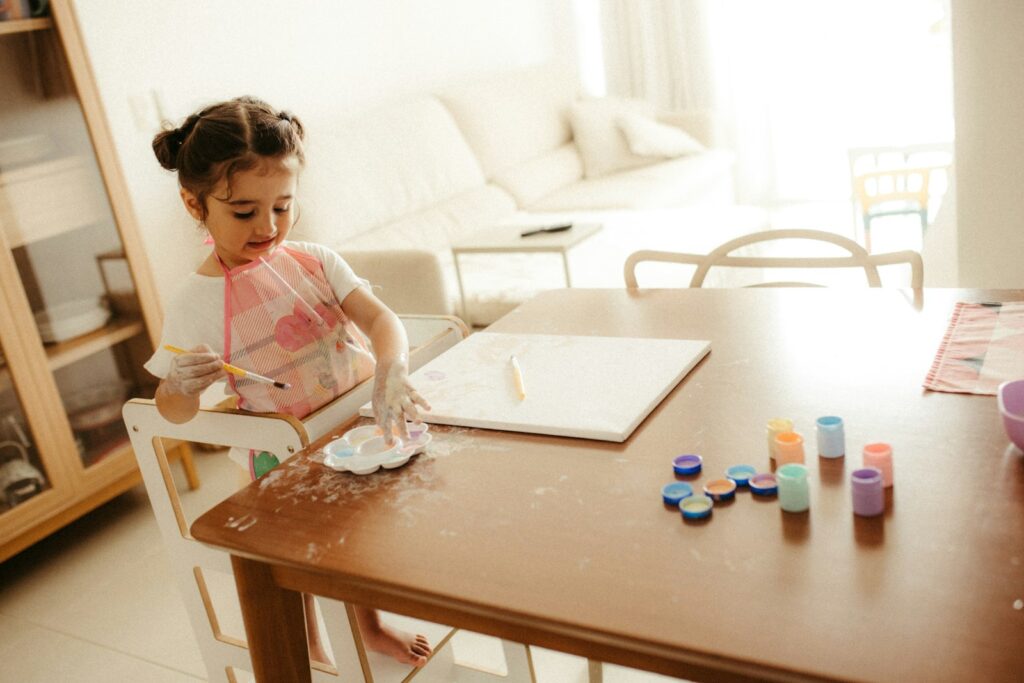
Giving children arts and crafts materials helps build a healthy imagination. Making things lets them use their creativity to make sense of the world around them and how they see it. Time for unstructured play, where children choose what to do, matters too.
Creative activities sit well alongside other kinds of play. Role play, acting out different scenarios and taking on different characters, supports emotional development by helping children understand other people and situations. Physical play outdoors builds heart health, muscle strength and motor skills. A balance of all three gives children a strong foundation, with crafts adding the focus and self expression that other play does not always provide.
Play that builds social and physical skills
Arts and crafts are one part of a wider mix of play that supports a child’s development, both mentally and physically. Creative activities, including role play as well as making things, help children explore and express how they see the world, improve their communication and help them understand other people’s points of view. Being creative also gives them an outlet for difficult feelings.
Play in a group teaches social skills. Children learn to share and cooperate, understand boundaries, make friends and get along with others, and a shared craft project can teach those lessons just as well as a game.
Physical play matters too. Outdoor play gets children using their bodies and exercising, building hand-eye coordination and stamina along the way. Some children need encouragement to go outside, and having a good space to play makes that easier. A balance of creative, social and active play gives children the broadest range of skills, so it is worth making time for all three.